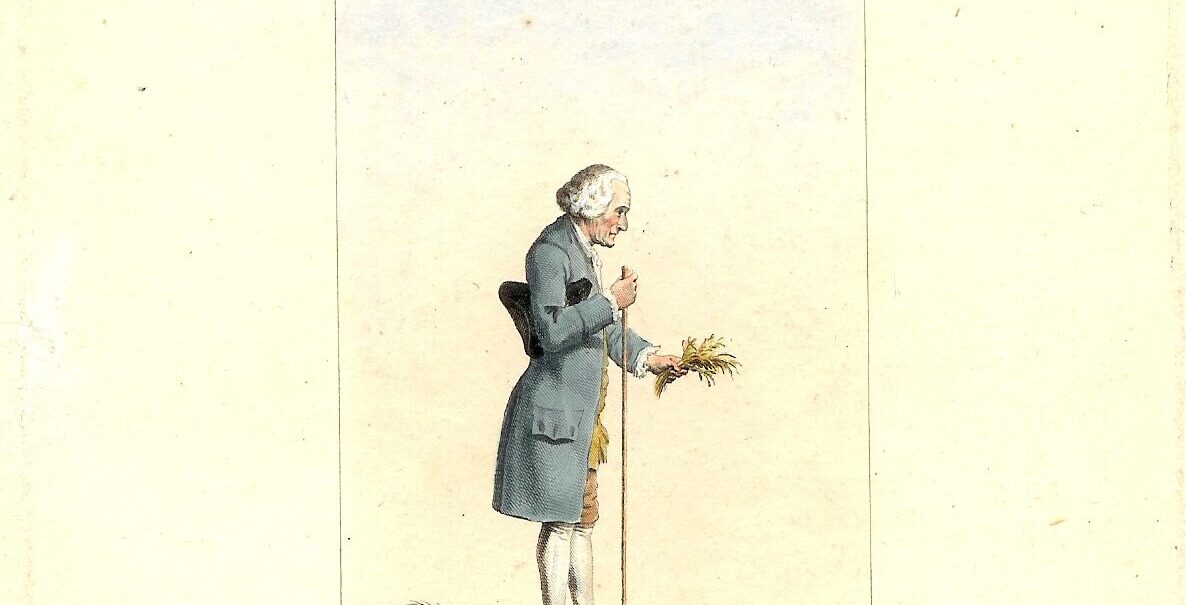
Marking the 250th anniversary of Jean-Jacques Rousseau’s death in 2028, this special issue of conexus explores the remarkable breadth of his thought and work. Moving beyond his contributions to political philosophy, it invites interdisciplinary perspectives on lesser-known aspects of his engagement with culture, education, music, literature, religion, science, and beyond.
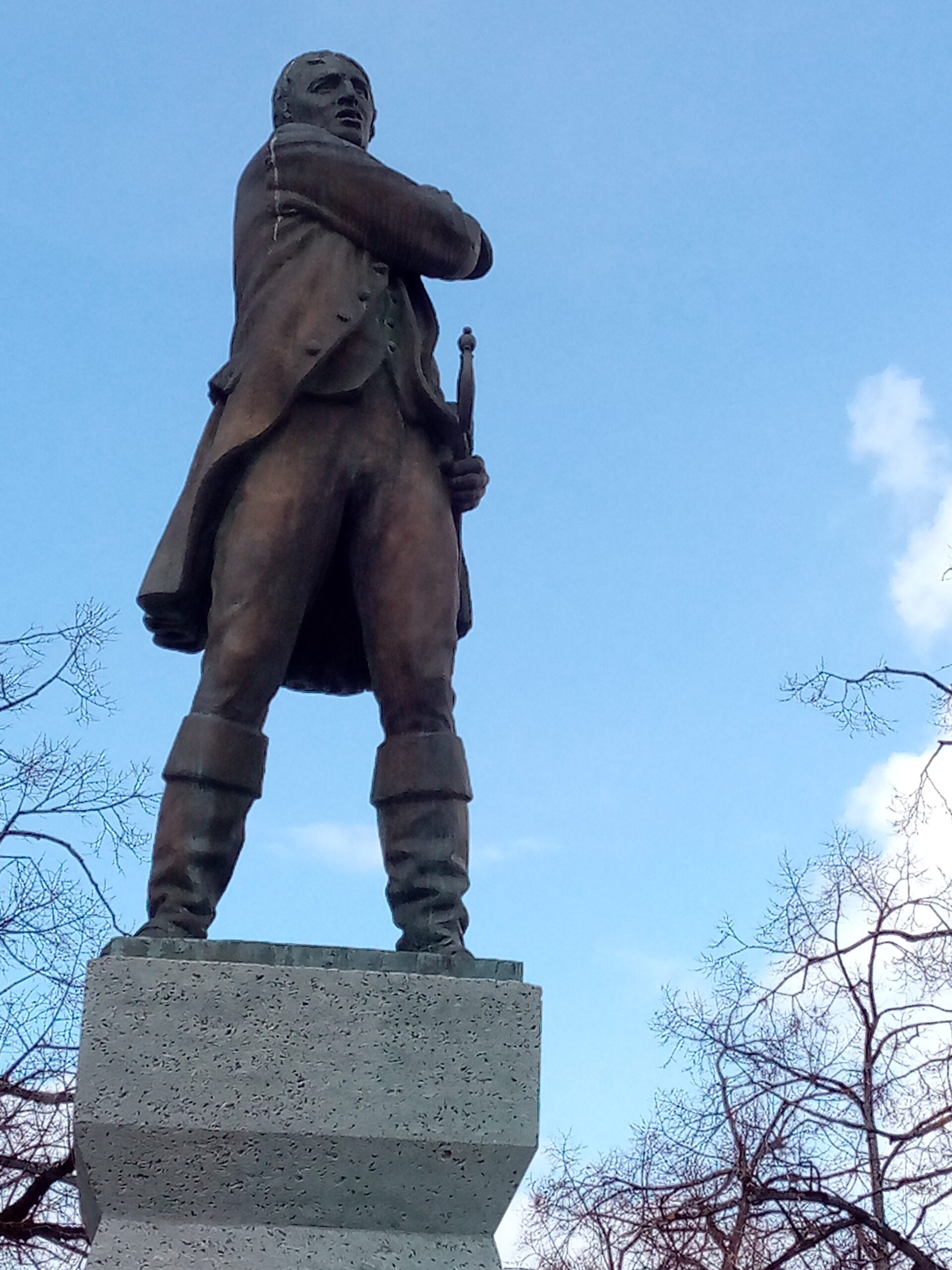
On 2 July 2028, it will be 250 years since the death of Jean-Jacques Rousseau, citizen of the Republic of Geneva and later of the Principality of Neuchâtel. Rousseau is regarded as one of the most important figures of the European Enlightenment. As a social and state philosopher, he had a lasting impact on modern political thought; in particular, his reflections on freedom and democracy exerted an influence far beyond his own time. His writings had a considerable influence on the French Revolution.
However, Rousseau, who was frequently attacked and persecuted and led a restless life, was far more than a political thinker. He was a critic of culture and civilisation, an educational theorist and pedagogue, a music theorist and opera composer, as well as the author of novels and theatre plays. Furthermore, he explored questions of the philosophy of religion, as well as the role and education of women. He received training in mathematics and geometry, pursued botanical studies and, at certain times, also engaged with chemistry.
Rousseau’s reputation as a philosopher has, to some extent, overshadowed the diversity of his work. The journal conexus, whose name – connections and interrelationships – is programmatic of its interdisciplinary approach, would like its issue devoted to Rousseau to focus in particular on lesser-known aspects of his thought and work. We therefore invite contributions not only from researchers in the fields of philosophy and political theory, but also from musicology, pedagogy, literary studies, religious studies and theology, as well as the history of science. Historical and biographical studies, as well as those examining the history of Rousseau’s influence, are also expressly welcome.
The early publication of this call for papers is intended to give interested researchers the opportunity to gather new results for their contributions. Colleagues from all disciplines are invited to participate. Manuscripts may be submitted in the national languages German or French, or in English.
Title Submission
Submission Deadline
Manuscript Submission
Peer Review
Scope
Abstract
Publication
31 December 2026
31 August 2027
Prof. Dr. Wolfgang Rother (wolfgang.rother@philos.uzh.ch)
Contributions will be reviewed in a double-blind procedure
20.000–35.000 characters (incl. spaces and footnotes)
1200–1500 characters (incl. spaces), in the language of the contribution
Spring 2028
The guidelines and a template can be found here: https://www.hope.uzh.ch/conexus/about/submissions.
Image credit: Jean-Jacques Rousseau in Ermenonville, June 1778, engraving after a drawing by Georg Friedrich Meyer (Wikimedia Commons).